Groome — ProBISWEB
For Groome Computer Solutions, active since 1992 in software for inventory, certification and inspection, we are building the web version of their inspection software, an Android app for fieldwork and their new website.
- Build
- Release
- Hosting
At a glance
- Our role
- Built, hosted and published by us
- Client
- Groome Computer Solutions B.V., Terwolde
- ProBISWEB
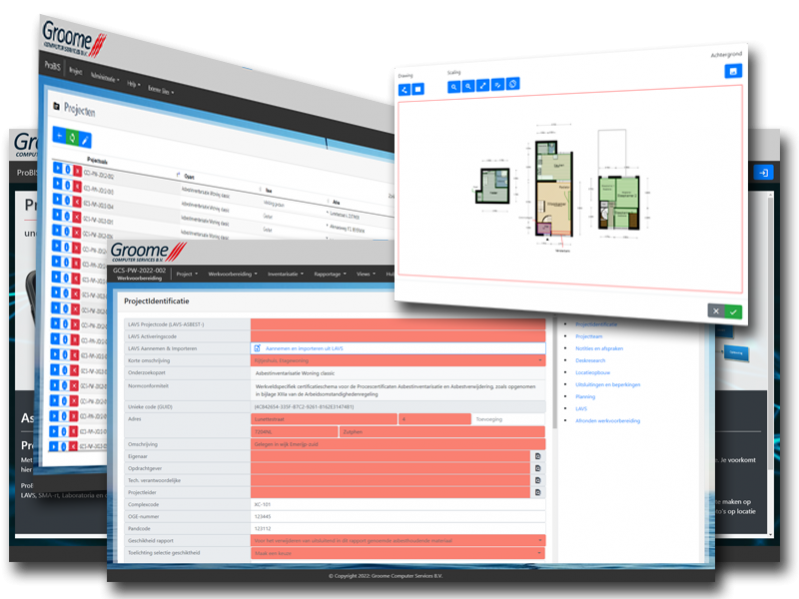
- Web version of ProBIS; replaces a VB.NET desktop application and is already in use by inspectors
- ProBISGo
- Android field app, works offline; under review at Google Play
- Website
- New Groome website, built by us
- Runs on
- Sarpius, in the Netherlands, managed by us
- Collaboration
- Alongside the client's regular IT partner
What was there
A VB.NET desktop application. It runs on the workstation itself: you install it per machine, and update it per machine too. The substantive work was solid — years of knowledge of how a survey fits together — but it was tied to the computer it was installed on.
ProBISWEB
The web version of that same application. Inspectors record per project what was found, link it to the right room or building element, and work toward a report. That's not a form but a tree of projects, locations and findings that all have to line up before a report can come out of it. Carrying that logic over is the real work; wrapping a web page around it is the easy part.
ProBISGo: fieldwork without coverage
A crawl space or a vacant building often has no signal, and that is exactly where the findings arise. ProBISGo loads the project onto the device before departure, including the firm’s own question types and order. After that the app works without a connection, and as soon as there is network again it syncs to ProBISWEB by itself. There is no upload button you can forget at the end of a long day. The app has been submitted to Google Play and is currently under review.
How it runs
On a VPS via Sarpius, which we manage. Not a container app on the platform, but a machine we set up entirely ourselves: when you're replacing an existing system, you simply have to deal with more of what was already there than with a greenfield project. It stays our platform and our management, so maintenance sits with the same team that writes the code.
Why that matters
Inspectors are already working with it while it's still being built. That's exactly the moment where a replacement project tends to go wrong: the new system works just slightly differently from the old one, and you only notice that once someone actually takes it out into the field. Because we build it and run it ourselves, that kind of finding is a matter of implementing and rolling out, not a change request to a third party.
Something similar for you?
The scoping conversation is free of charge. We'll tell you honestly whether it's a fit for us.